




11 Jun Furniture and wood in Gaudí’s work
Furniture and wood in Gaudí’s work
This week, Barcelona commemorates the centenary of the death of Antoni Gaudí, a universal reference from our city whose work transformed forever the way we understand architecture, design, and the spaces we inhabit.
When we think of Gaudí, we often think of his organic forms, his dialogue with nature, the richness of his details, or buildings that have become universal symbols. However, there is another dimension of his work that deserves special attention: his way of understanding furniture.
For Gaudí, a piece of furniture was not an independent element within a room. It was another part of the architectural project. An idea that, more than a century later, remains deeply relevant: spaces are not completed with objects, but with pieces designed to become part of them.
Furniture as an extension of space
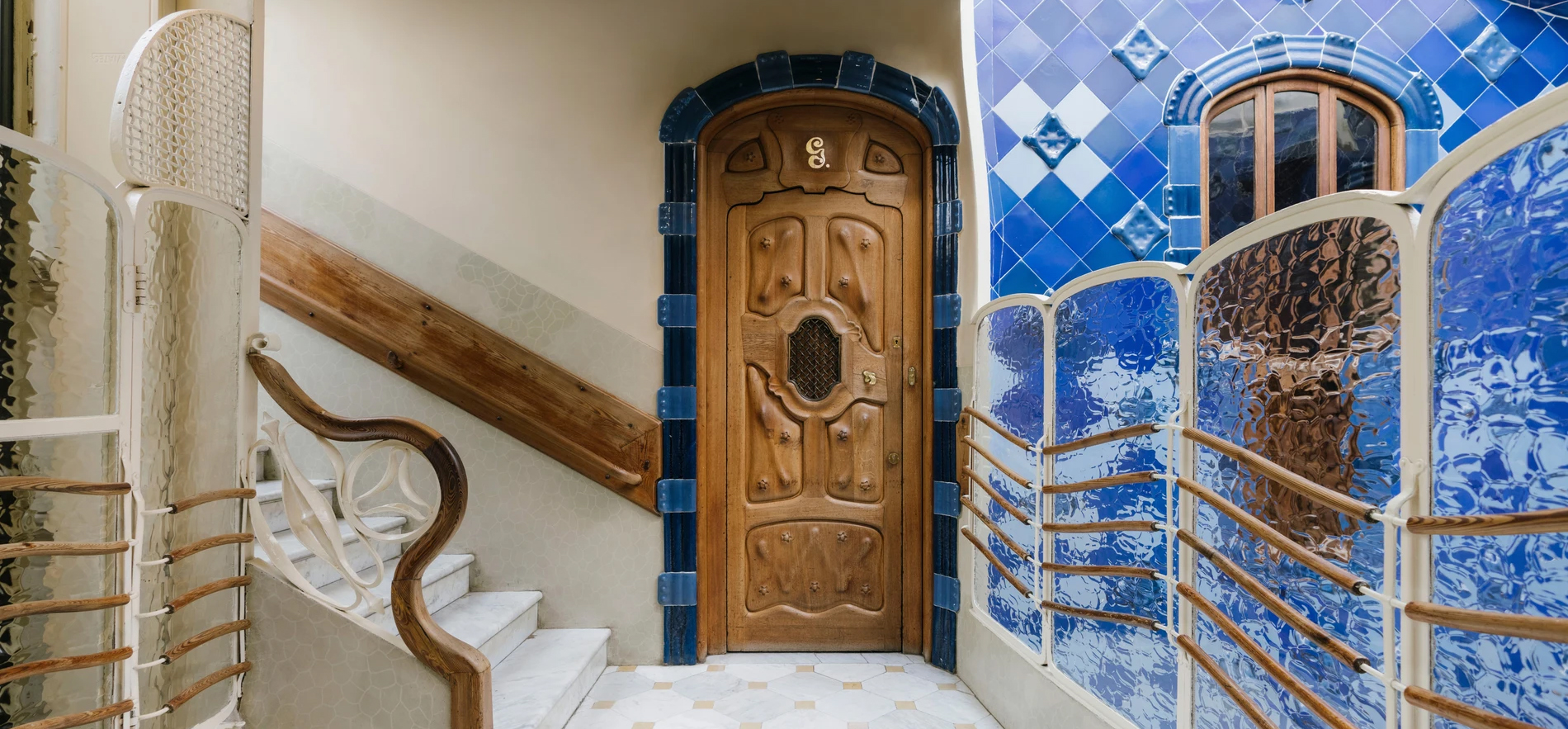
In projects such as Casa Batlló and Casa Milà, Gaudí’s vision went far beyond the structure of the building. He also designed the interior elements that accompanied everyday life: doors, benches, chairs, handles, cabinets, and pieces created specifically for each space.
Each element responded to the same intention: making architecture, functionality, and beauty coexist. Furniture was no longer a simple complement, but part of a complete experience. Shapes, proportions, and materials were designed to interact with the space and with the people who would inhabit it.
This way of working remains a reference for those who understand design as something inseparable from its surroundings.
Wood as a material with its own identity
Within this way of creating, wood played a fundamental role.
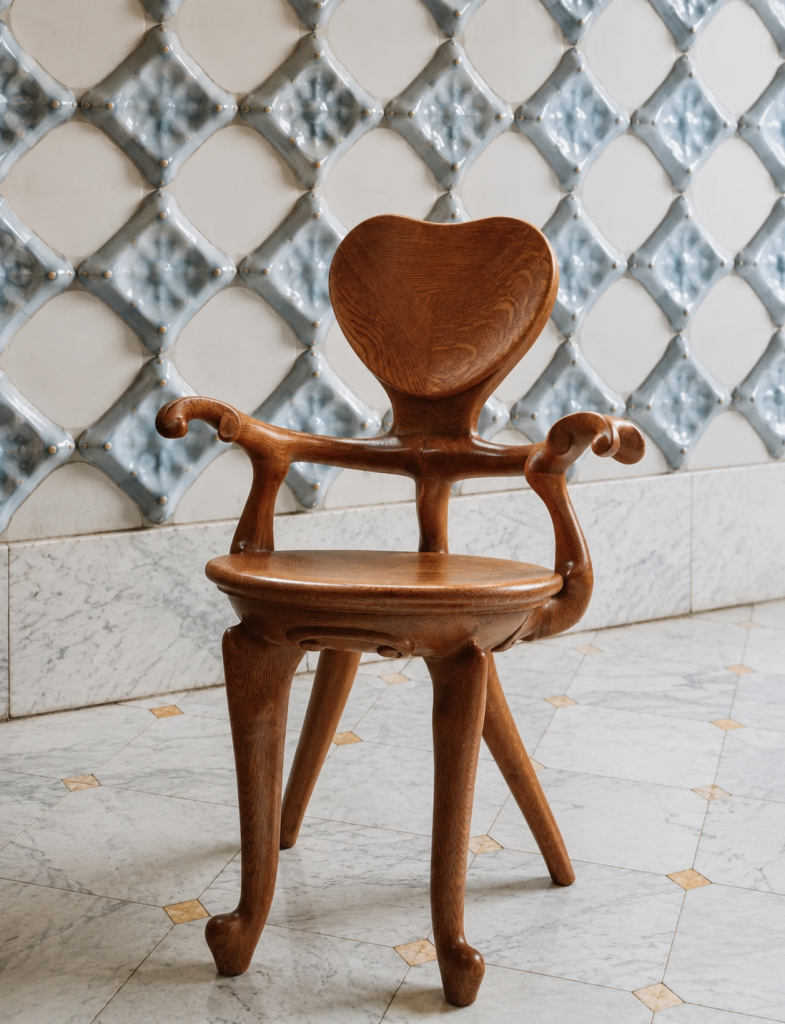
Chair from the office of Casa Calvet, Antoni Gaudí, Barcelona
Gaudí did not see materials simply as construction resources. He studied them, understood them, and explored their possibilities. Wood allowed him to work with curves, textures, and forms adapted to the human body, creating pieces where functionality and artistic expression went hand in hand.
His work demonstrates an idea that remains relevant in contemporary woodworking: understanding a material deeply is the first step towards creating something truly unique. Wood brings a special dimension to spaces: it ages, adds warmth, and preserves the trace of craftsmanship. Every grain, joint, and finish becomes part of a story.
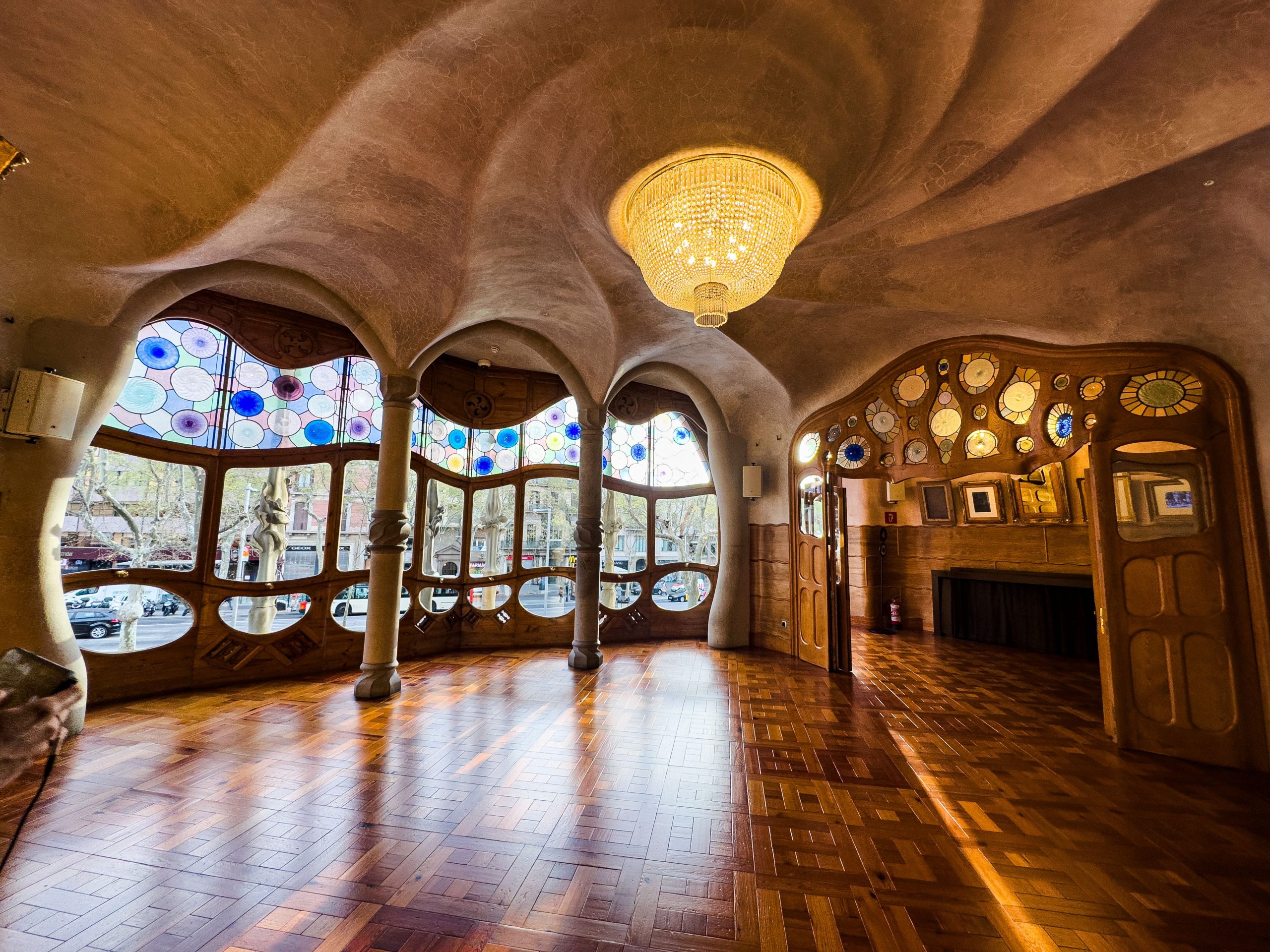
Main living room of Casa Batlló, Antoni Gaudí, Barcelona
Design and craftsmanship: an essential collaboration
One of the great lessons of Gaudí’s work is the importance of the dialogue between design and craftsmanship. His ideas required skilled hands capable of interpreting complex forms, solving details, and transforming a vision into a tangible piece. Creativity reached its fullest expression when combined with technical knowledge and artisanal precision.
This relationship between designer, carpenter, and material remains essential in the creation of bespoke furniture. At Frapont, we understand each project from this same perspective: it is not simply about manufacturing an element, but about interpreting a space, understanding its needs, and creating a solution that makes sense as part of the whole.
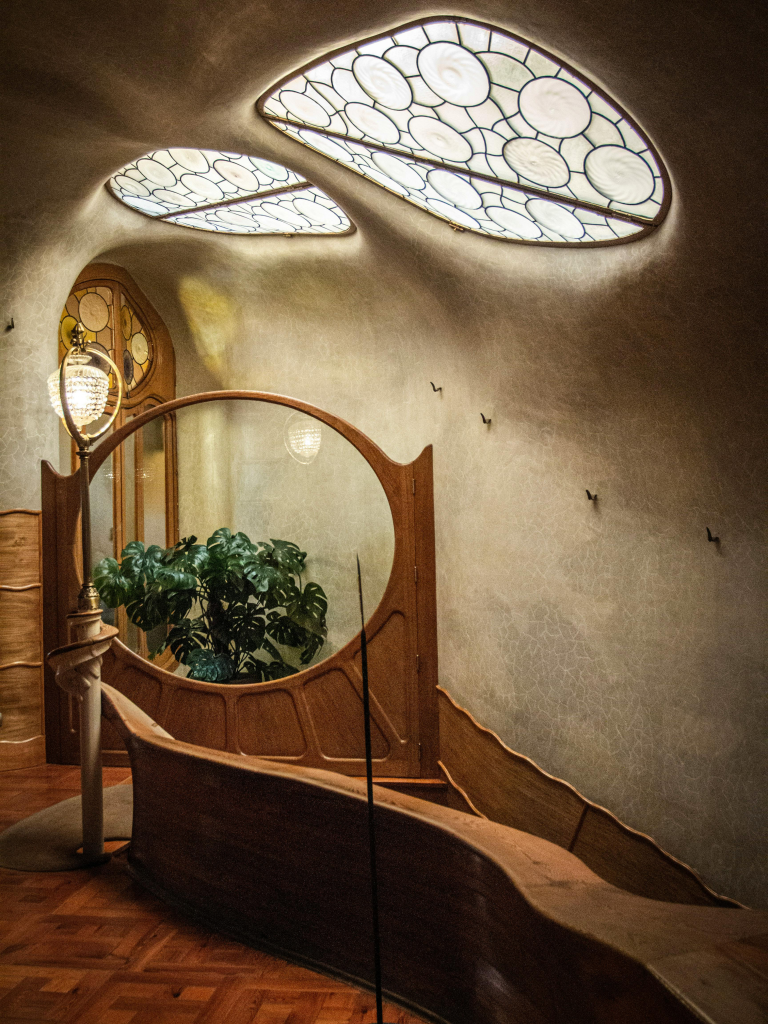
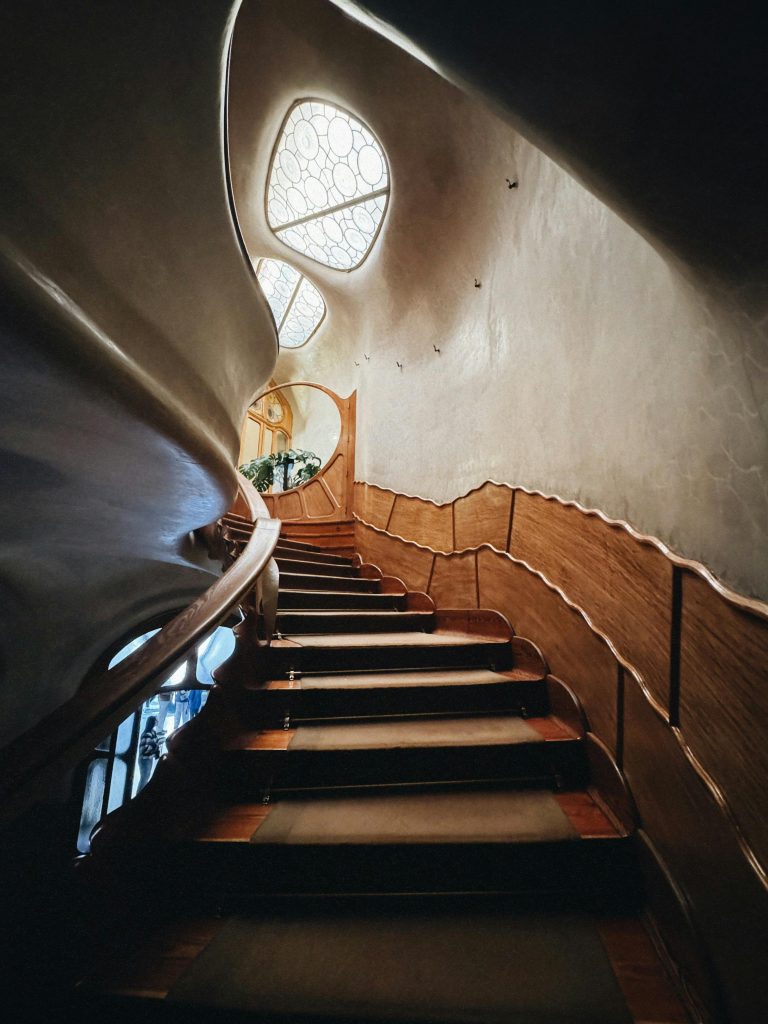
Casa Batlló staircase, Antoni Gaudí, Barcelona
A tradition of craftsmanship that remains alive in Barcelona
Gaudí’s work is part of a culture of design and craftsmanship that has shaped Barcelona’s identity. His way of working highlighted the collaboration between architects, artisans, and specialists: a way of creating where every detail had a reason to exist.
That legacy continues to inspire a way of working with wood based on respect for the material, attention to detail, and the search for solutions designed for each space. Because bespoke woodworking is not only about transforming a raw material, but about interpreting a project and turning it into a piece designed to last.
The value of bespoke furniture today
In a time when mass production dominates a large part of the market, Gaudí’s vision reminds us of the value of uniqueness. A bespoke piece of furniture does not simply occupy a space: it responds to it. It is born from a specific need, an idea, and a process where every decision matters.
One hundred years after his death, his legacy continues to inspire a way of creating based on respect for materials, attention to detail, and the search for solutions that endure. Because when design and woodworking work together, a piece of furniture stops being just an object. It becomes part of the space, the architecture, and the life that takes place within it.
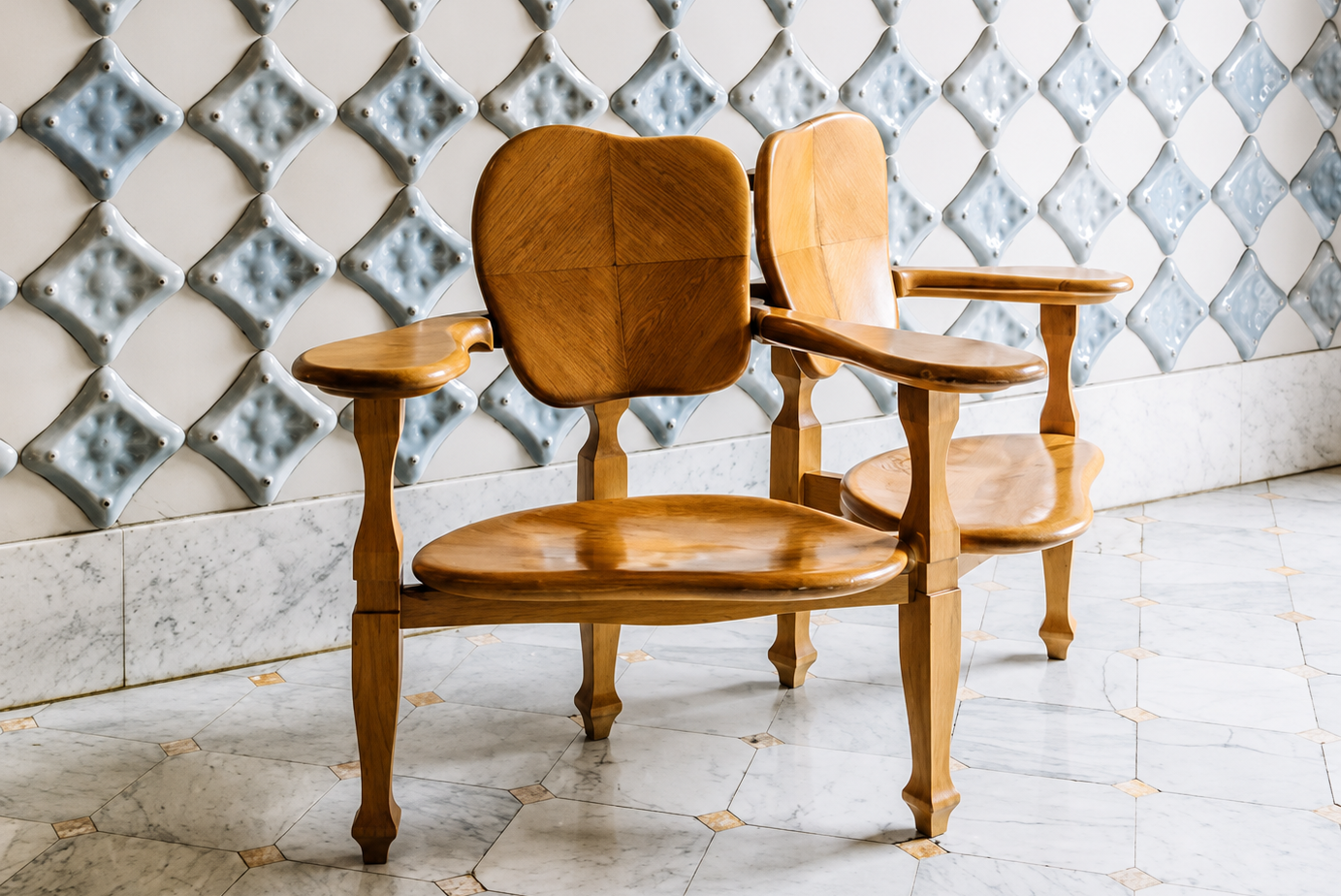
Double bench for the dining room of Casa Batlló, Antoni Gaudí, Barcelona
At Frapont, we continue to work from this same conviction: every project deserves its own perspective, a carefully crafted process, and a solution that combines design, functionality, and respect for the material. Because wood is not only part of the spaces we create; it also helps define them.